Diet & nutrition · United States · Data to October 2026
We no longer diet for weight loss: diet and nutrition trends for 2027
By Hamutal (Tula) Schieber · Published · Updated
Hamutal (Tula) Schieber is founder and CEO of Schieber Research.
The short answer. We no longer diet for weight loss. The biggest diet trend going into 2027 is not a diet; it is a change in what diets are for. In the US, Google searches for “diet for weight loss” fell 53% in a year, while searches for how to eat on a GLP-1 drug rose 58% and searches for diets that manage a health condition rose 50% or more. GLP-1 drugs are taking over weight loss, and diet is being rehired for the jobs a drug can’t do.
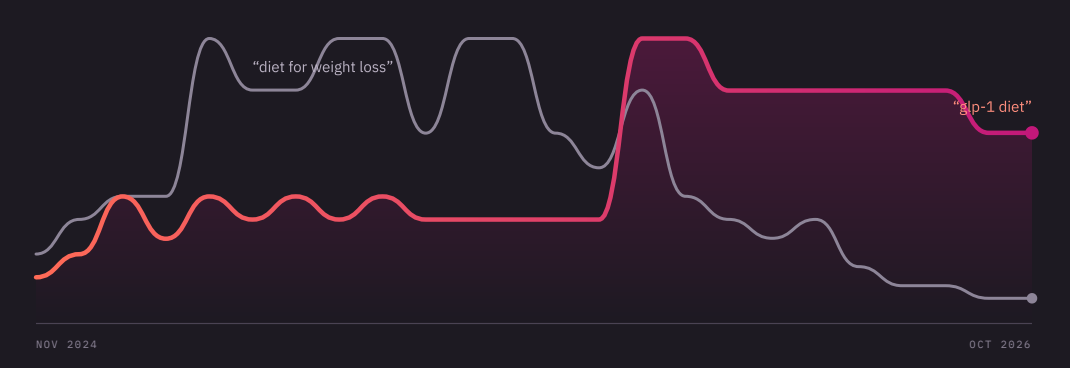
So what: a brand that still sells “a diet” or “weight loss” is selling last year’s reason to buy. The growth is in solving a named problem (blood pressure, muscle on GLP-1, bloating) inside foods people already eat, for an audience that is older than most food marketing assumes.
Key takeaways
- Weight loss is no longer the main reason to choose a diet. Google searches for the DASH diet rose 93% and “diet for insulin resistance” 50%, while “diet for weight loss” fell 53%.
- GLP-1 users are building their own diet: protein first, then fiber, then bone. Searches for “protein shake for glp-1” rose 326%, and Reddit posts about bone density rose 37%.
- Gut health is getting specific. Searches for “gut health diet” fell 30%, while psyllium husk rose 67%. On Amazon, fiber gummies sell more than a year ago and probiotics sell less.
- Strict diets are losing their beginners. Searches for “beginners keto” fell 64%; “beginners mediterranean diet” rose 31%. Reddit posts naming carnivore fell 47% and keto 41%.
- Protein and fiber are moving into everyday foods. Searches for “high protein yogurt” rose 53% while “high protein bars” fell 35%.
All figures: United States. Google searches and Reddit posts, November 2025–October 2026 compared with the 12 months before. Amazon: sales compared with a year ago.
Are people still dieting to lose weight?
Less than before, and differently. Google searches for “diet for weight loss” fell 53% and “healthiest diet to lose weight” fell 61%. On Reddit, posts about weight loss in 38 diet and health communities fell 23%, and posts about calorie counting fell 38%.
The goal has not gone away: searches for how to lose belly fat rose 74%. What changed is the tool. Fewer people pick a diet to do it.
What people now choose a diet for is a named condition. Searches for “dash diet for lowering blood pressure” rose 48% to about 139,000 a month, and “diet for insulin resistance” rose 50% to about 33,000 a month. Searches for fatty liver diets and heart-healthy diets rose as well. One supplement follows the same job: searches for berberine, taken for blood sugar, rose 12% to about 500,000 a month, and it sells more on Amazon than a year ago.
“How did I do for my first ever Mediterranean diet meal? Doctor told me either diet now or die, so here I am.” Post title in r/MediterraneanDiet, February 2026, 124 comments
What it might mean. The reason to buy has moved from the mirror to the doctor’s office. Organize ranges, meal plans and content by condition (blood pressure, blood sugar, liver), not by diet tribe, and use the words people type. Older adults are the place to start: “dash diet for seniors” rose 158%.
Worth checking. Do changes in condition-specific searches also show up in sales or repeat purchases among older adults?
What do people eat on GLP-1 drugs?
People on GLP-1 drugs such as Ozempic, Zepbound and Mounjaro are building a diet around what the drug can’t protect: muscle, digestion and bone.
- Protein comes first. Searches for “protein shake for glp-1” rose 326% to about 3,900 a month.
- Fiber is second. Searches for “high fiber foods for glp-1” rose 75%.
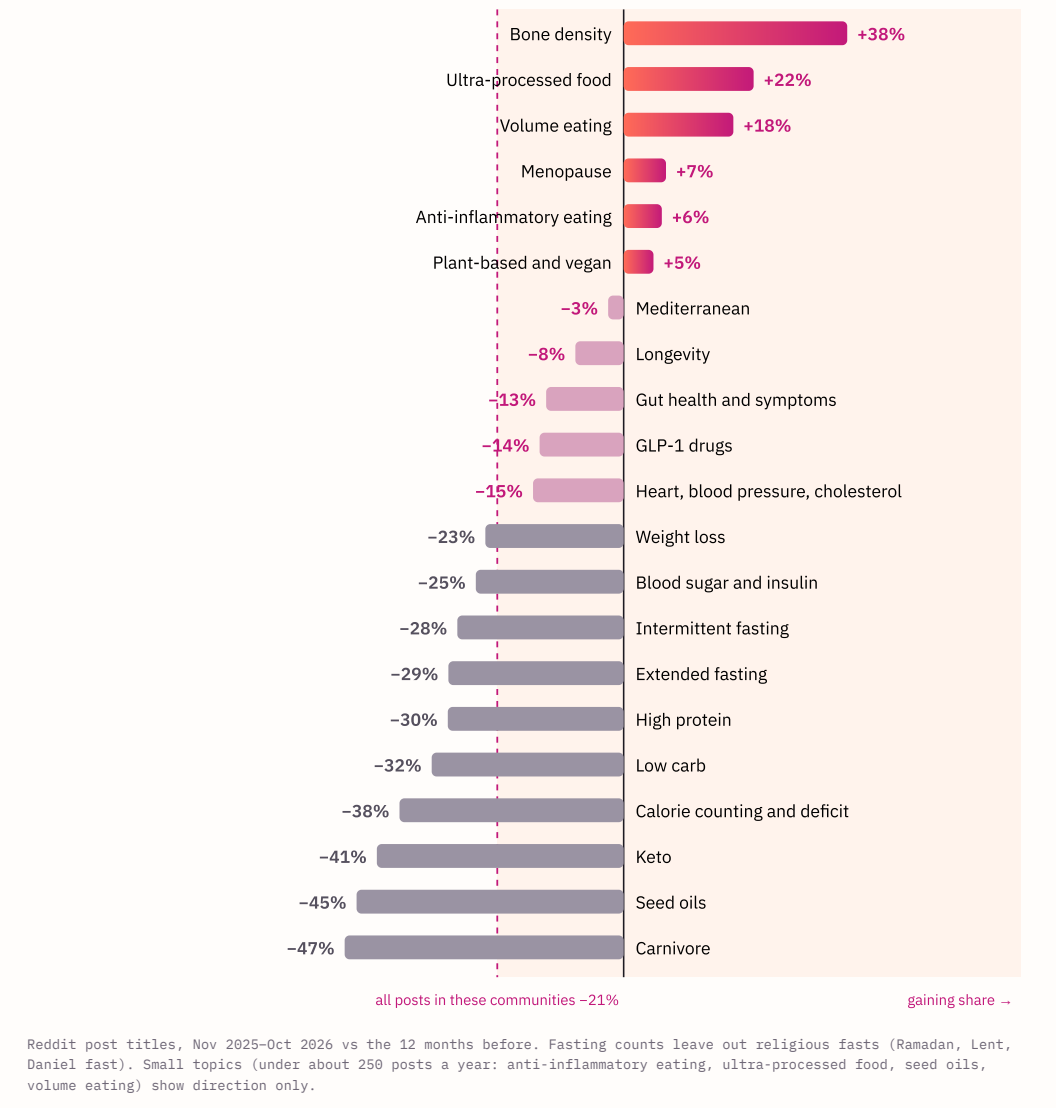
- Bone is the new concern. Searches for “glp-1 bone density” jumped in spring 2026 and stayed up, and Reddit posts about bone density rose 37% while posts in those communities overall fell 21%.
The shelf is young. On Amazon, most of the top GLP-1 support supplements and cookbooks were listed in the last 18 months.
What it might mean. GLP-1 users are not a lost customer; they are a new one with a shorter shopping list and a smaller appetite. Small, dense portions, protein that is easy to drink, gentle fiber and bone support in familiar foods fit that list. Bone is the open space: the searches rose and the shelf has not moved yet.
Worth checking. Which products do GLP-1 users buy again, and does interest in bone health translate into purchases?
Is gut health still a trend?
Yes, but the general promise is fading and the specific fixes are growing. Searches for “gut health diet” fell 30%, and “colon cleanse” fell 29%.
People now search for the symptom and the plain fix. Searches for bloating rose 15%, psyllium husk 67%, and prebiotics 27%. Fiber is searched most often together with constipation, hemorrhoids and diverticulitis, and those pairings grew 41% as a group.
Probiotics go the other way. Searches rose 12%, but their sales on Amazon fell. Fiber gummies sell more than a year ago, while psyllium and plain fiber supplements sell about the same: most of the growth in search has not reached the checkout yet. Every probiotic pairing we measured faded, including “probiotics for women” (−22%).
“poop more is literally underrated things that feels good” TikTok comment under a high-fiber recipe video with 6.6 million views, August 2026, 110,430 likes
What it might mean. “Supports gut health” is becoming wallpaper. Products named for the problem they solve (bloating, constipation, IBS) and built on plain, familiar fixes are where the growth is. The rising vocabulary is frank and unglamorous, and few brands use it yet.
Worth checking. Compare sales of symptom-specific products with growth in the same search terms, particularly for probiotics.
Is keto still popular? What is replacing keto and carnivore?
Keto and carnivore are fading, and newcomers are leaving first. Google searches for carnivore fell 55%, low-carb 27% and keto 19%. Searches for “beginners keto” fell 64% and “carnivore diet for beginners” 63%. On Reddit, posts naming carnivore fell 47% and keto 41%, about twice as fast as the communities overall. On Amazon, keto snacks sell less than a year ago.
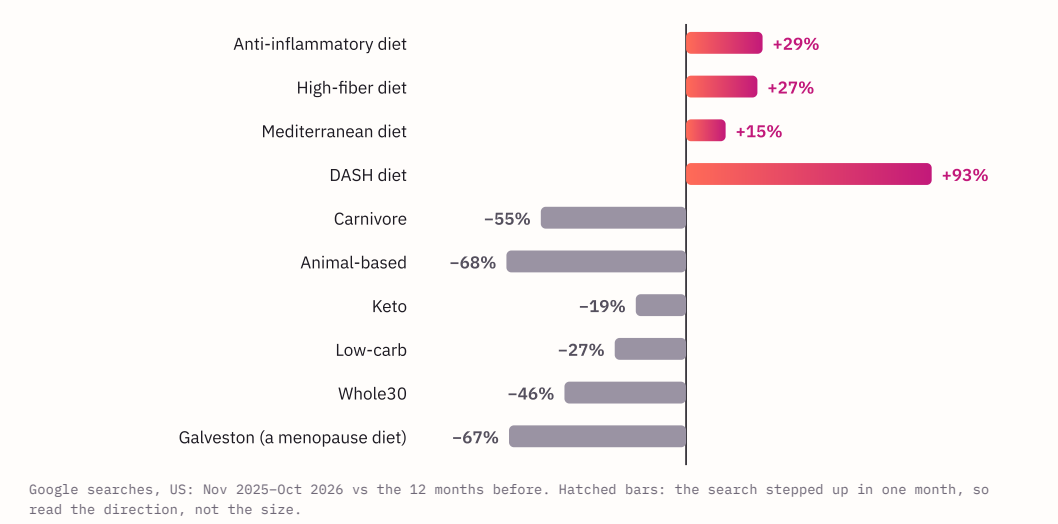
The diets that grow are built on what to add, not what to cut. Searches for the anti-inflammatory diet rose 29%, the high-fiber diet 27%, and the Mediterranean diet 15%. “Beginners mediterranean diet” rose 31%.
On Reddit, posts about Mediterranean and anti-inflammatory eating held level while posts about every strict diet fell: people talk about them as much as before in a conversation that is shrinking.
Intermittent fasting is past its peak. Searches hold (+10%), but Reddit posts naming it fell 28%, and “is intermittent fasting healthy” fell 30%.
What it might mean. Stop building new ranges on keto, carnivore or low-carb branding. The next customer is a beginner who wants to add, not cut: starter kits, first-week plans, and products that keep what keto shoppers liked (low sugar, feeling full) without the rules.
Worth checking. Watch for gains in social discussion and retail sales for Mediterranean and anti-inflammatory eating as search interest grows.
Where are protein and fiber going?
Into everyday foods. Protein is leaving the bar and the shake and moving into staples, and fiber is following a year or two behind.
| Rising (Google searches) | Change | Fading (Google searches) | Change |
|---|---|---|---|
| Good Culture cottage cheese | +56% | Low sugar snacks | −55% |
| High protein yogurt | +53% | Greens powder | −37% |
| Prebiotic soda | +63% | Keto snacks | −36% |
| Psyllium husk powder | +62% | High protein bars | −35% |
| High fiber snacks | +50% | Magic Spoon cereal | −26% |
The audience is widening. Searches for “high fiber foods for men” rose 98%, “for seniors” 99%, and “protein powder for older adults” 62%. On Amazon the picture is mixed: fiber gummies sell more than a year ago, protein powder, pasta, bars and cereal sell about the same, and protein water sells less.
What it might mean. The macro is no longer the product; the everyday food that carries it is. A familiar staple with more protein or fiber is an easier sell than a new bar or powder, and men and older adults are the audiences growing fastest.
Worth checking. Compare repeat purchases of protein- and fiber-enriched staples with those of bars and powders among men and older adults.
Is the worry about ultra-processed food and seed oils still growing?
In search, the alarm is cooling. Searches for red 40 fell 37%, seed oils 49% and beef tallow 44%. Searches for ultra-processed food slipped 8%.
What grows is the substitute. “Natural alternative to red 40” went from almost no searches to about 6,000 a month. People appear to be past asking whether something is bad, and are looking for what to use instead. On Reddit, the expert conversation continues: posts naming ultra-processed food rose 22%, most of them in a nutrition science community.
What it might mean. Lead with what is in, not only with what is out. A named, familiar swap (beet juice for color, cane sugar, olive oil) answers the question people ask now. A “free from” badge answers last year’s.
Worth checking. Check whether interest in named alternatives translates into purchases and whether the substitute matters more than the claim.
What does this mean for food, drink and supplement brands?
Sell the job, not the diet. People are no longer joining a diet. They are solving a problem. Three things follow:
- Name the problem in people’s own words. They search “dash diet for lowering blood pressure”, “high fiber foods for glp-1” and “bloating”, not “wellness”.
- Put the fix in a food they already eat. Yogurt, cottage cheese, pasta, coffee and soda are gaining where bars, powders and keto snacks are losing.
- Design for midlife and for GLP-1. The fastest-growing pairings are with seniors, perimenopause and people on GLP-1 drugs.
The full report turns these into seven openings worth testing, each with who it is for, what to offer and the words to use.
How was this measured?
tomorrow& reads three kinds of evidence together: what people search, what they say and what they buy.
- Search: Google US monthly searches for diets, foods and products and the ways people ask about them, November 2025–October 2026 against the 12 months before, plus Amazon food and drink searches read on 12 November 2026.
- Social: post titles in 38 Reddit communities on diets, GLP-1, gut health, menopause, bone and longevity, over the same two years. All posts in these communities fell 21%, so a topic that holds level is gaining share.
- Sales: Amazon sales for the top 10 listings in each product group, compared with a year ago. Fresh groceries such as cottage cheese and Greek yogurt are not read on Amazon.
Search growth means more people use these words. It does not mean more people have these conditions. This article is market research, not medical or nutrition advice.
Get the full report
Diet & Nutrition Snapshot · 25 pages · PDF · $1,250
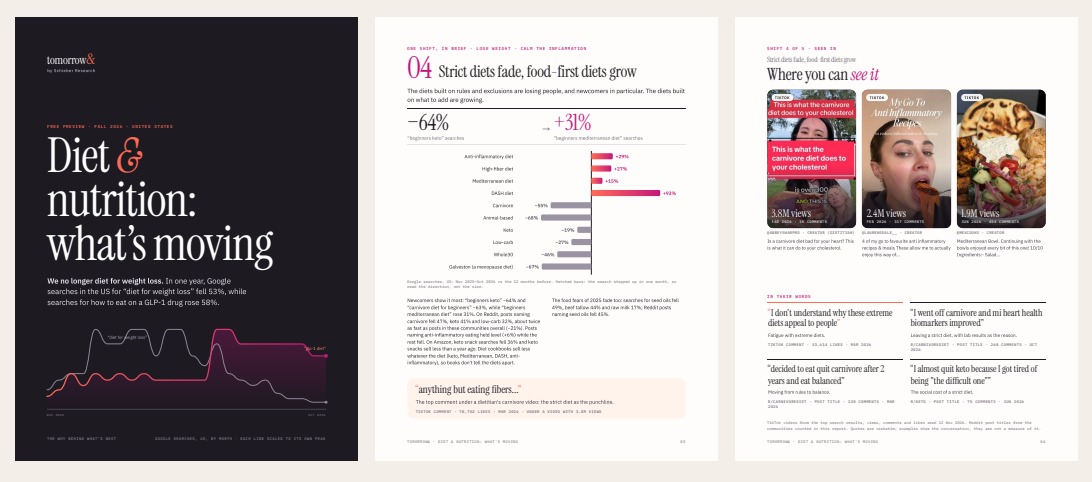
- The five shifts in depth, each with its numbers as charts and the TikTok videos, comments and Reddit posts where you can see it.
- So what for brands: what to offer, the words people use, who to start with, what to stop, and the opening in each shift.
- Seven openings worth testing, plus five smaller shifts to watch, from food for mood and sleep to creatine for women.
- Reddit year on year across 38 communities, and which diet is discussed for which goal.
Working on a different category, or a question of your own? tomorrow& maps any category the same way, around your question. Contact Tomorrow&.
Questions and answers
What are the biggest diet trends for 2027?
Five shifts show in US data to October 2026: diets chosen to manage a condition rather than to lose weight; a GLP-1 way of eating built on protein, fiber and bone; gut health moving from general promises to specific fixes; strict diets such as keto and carnivore fading while Mediterranean and anti-inflammatory eating grow in search; and protein and fiber moving into everyday foods.
Is the keto diet declining?
Yes. In the US, Google searches for keto fell 19% and “beginners keto” fell 64% between November 2025 and October 2026, compared with the year before. Reddit posts naming keto fell 41%, and keto snacks sell less on Amazon than a year ago.
What should brands know about GLP-1 and food?
People on GLP-1 drugs search for protein first (“protein shake for glp-1” +326%), then fiber (“high fiber foods for glp-1” +75%), and increasingly bone health. Most top GLP-1 support products on Amazon were listed in the last 18 months, so the shelf is still forming.
Is gut health still growing?
The general term is fading (“gut health diet” −30% in US Google searches), while specific symptoms and plain fixes grow: bloating +15%, prebiotics +27%, psyllium husk +67%.
Is fiber the new protein?
Fiber is following protein into everyday foods, about a year or two behind. US Google searches for high-fiber diets rose 27%, “high fiber snacks” 50% and “prebiotic soda” 63%, and the fastest growth is among men and seniors. Protein is still the larger search.
Where does this data come from?
From tomorrow& by Schieber Research: Google US searches, post titles in 38 Reddit communities, and Amazon searches and sales, each read over November 2025–October 2026 against the 12 months before.
Research disclaimer
This report provides market research and strategic interpretation based on information available at the date of publication. Product directions are opportunities to evaluate, not guarantees of demand or commercial success. Business decisions require further validation appropriate to the product and market.
Health disclaimer
References to ingredients, products and consumer experiences do not constitute medical advice or establish safety or efficacy. Formulations and health claims require independent scientific and regulatory assessment.