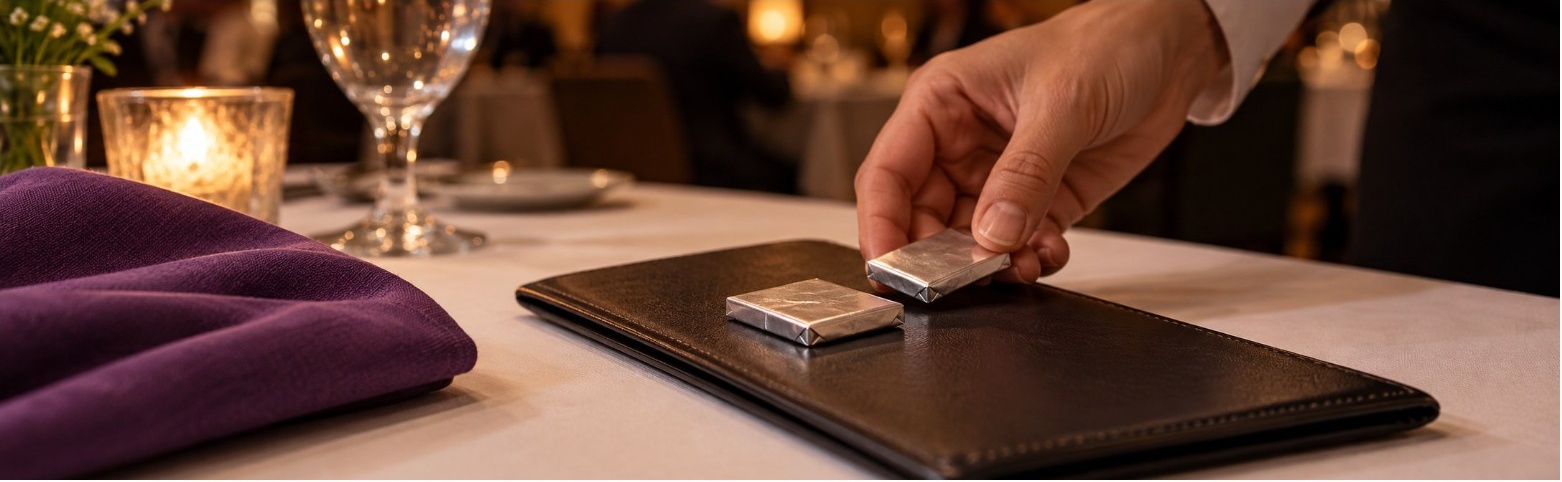
In a small study at a New Jersey restaurant, a server tried four ways of bringing the check. Two pieces of chocolate raised tips. One piece, followed by an unprompted offer of a second, raised them more. Same two candies. What changed was how the gift felt.
This is the third paper in The Joy Dividend in Practice. No. 01 removed the friction nobody chose. No. 02 added the play people choose. This one is about the moment nobody saw coming, and how to design it on purpose.
It starts with the order: surprise on top of friction reads as an apology. It looks at why the unexpected lands harder, why people remember the end of a food experience better than the middle, and why a surprise that contradicts the pack is a complaint, not a delight. It maps where surprise belongs, separates stunts from systems, and works through a surprise that has been sitting under the same bottle cap for 20 years.
It ends with eight questions to ask before you call anything a surprise, and four ways surprise goes wrong, including the one that turns a reward into a slot machine.
The best surprise is a promise you never made, kept anyway.
Next in the series: Connection & Purpose.
& why it matters
Before adding a surprise to your product, decide what your team can deliver reliably, where people will discover it, and whether it adds value beyond the promise on the pack. Test the experience after repeat use. A surprise needs a system behind it, even when the customer never sees one.
Download the white paper