At a glance
What the report explores
Chosen participation can add value once the basic product works. The paper distinguishes sensory pleasure from an invitation to play and identifies ways play can go wrong.
Method & scope
No. 02 of The Joy Dividend in Practice applies Playful Design to food and beverage through product examples, the consumption journey and eight review questions. The design principles are directions to test with users, not guaranteed commercial outcomes.
Access: Free white paper PDF.
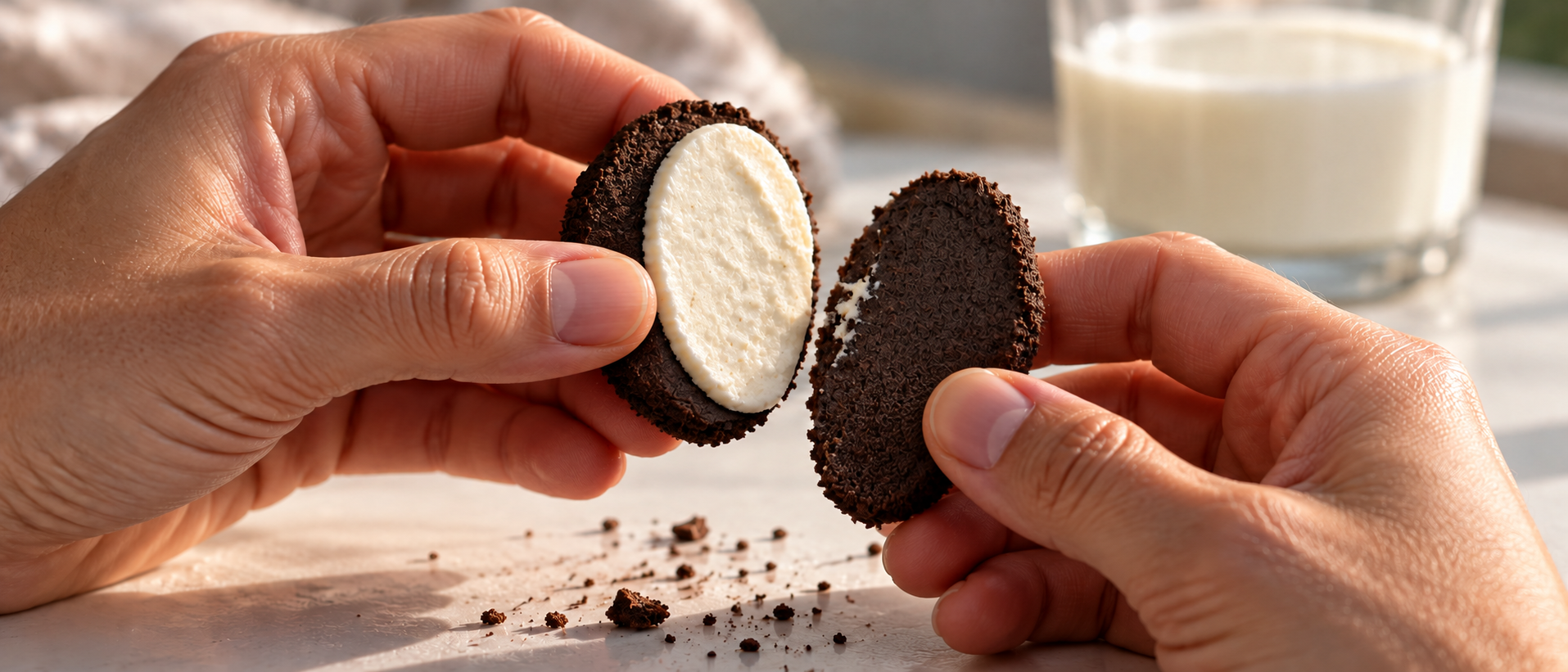
Download the free white paper →Nobody needs to twist a sandwich cookie apart. It doesn’t make the cookie taste better. It takes longer. It leaves cream on your thumb. People do it anyway.
This is the second paper in The Joy Dividend in Practice. No. 01 removed the friction nobody chose. This one is about what comes after calm: food people play with, and what that means for food and beverage product development.
It starts with the order: play only works once the product is calm. It argues that chosen friction is a feature, and that it pays only when people get to finish. It takes the senses one at a time and separates pleasure from play: a crunch becomes play when it invites you to do something. It maps where play belongs on the journey, works through a snack that has been getting it right since 1966, and names four ways play goes wrong.
It ends with eight questions to ask before you call anything fun. The first is whether the product works, and tastes right, without the play. If the answer is no, go back to No. 01.
Fun isn’t a flavor launch. It’s how the food behaves in your hands.
Next in the series: Surprise & Delight.
Download the white paperThe research behind the questions
Explore the earlier analysis. Each article reflects its original publication period.
- When Friction Becomes the Feature (And Why Convenience Was Never the Villain) (February 24, 2026)
Play With Your Food applies the distinction between unwanted effort and chosen participation to food design, with questions for a product-development brief.