Everyone is running research in AI now. That’s awesome.
If—and that’s a big if—you know how to ask, AI can do better work than many analysts. It can cover more ground, make useful connections and turn a mountain of information into something you can actually read.
But give it a conventional research brief, and you’ll often get a conventional research process.
It goes to the trend reports everyone has already read. It looks up competitors and reads their reports, interviews and press releases. It collects the same “top trends for 2027” lists, summarises them neatly and hands them back with confidence.
You have a reading list. You still need a method.
Megatrends last. Needs last. Signals change.
You can’t understand what might work without understanding the need behind it.
But understanding the need is only the beginning. You also need to know how people talk about it right now. Which solutions they find good enough. Which ones disappoint them. What they’re trying instead.
The need for better sleep endures. The language, rituals, ingredients and products people turn to keep changing.
Those changes matter. They tell you where existing solutions fall short—and where there may be room for something better.
Research needs to connect
Consumer insights, competitive intelligence and market trends usually live in three separate decks, produced by three separate teams.
The consumer deck explains what people want. The competitive deck explains what companies offer. The trends deck explains what’s changing.
The most useful questions sit between them.
Which needs are competitors still failing to meet? Why is a familiar solution finding a new audience? Where is a behaviour moving from one category into another?
So we used AI to rebuild the way we connect the evidence.
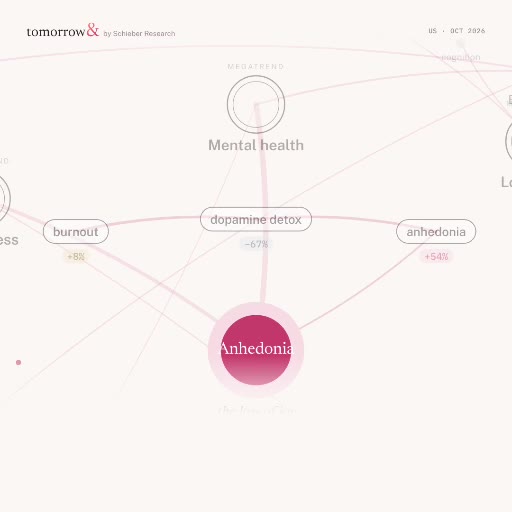
Megatrends, drivers, needs, formats, categories and audiences become points in one network. We connect them, like neurons.
Menopause connects to sleep, muscle, skin and mood. Creatine connects to conversations about longevity, focus, recovery and GLP-1s.
Each connection gives us something to investigate: who is making it, what is driving it and whether the available solutions deliver.
From connections to foresight
Live signals from social, search and sales help us identify connections that are growing.
When the same need shows up across categories, sources and audiences, we look closer. Is interest translating into behaviour? Are people finding satisfying solutions? Are brands responding—or repeating the same promises?
That’s how consumer insights, competitive intelligence and trends become part of one forecast.
The forecast is a reasoned view of what could happen next, grounded in what people need, how they behave and what the market is doing about it.
And a researcher reads every finding. We question the connections, weigh the evidence and decide what deserves attention.
& why it matters
A trend list can tell you what everyone is talking about. A business needs to decide what to do with that information.
What should you develop? Which audience should you look at differently? Where is there an unmet need worth pursuing—and which apparent opportunity doesn’t hold up?
That’s what we built tomorrow& to help answer.
tomorrow&. The why behind what’s next.